When villa prices run into crores, the developer and the paperwork deserve as much attention as the floor plan, and that is the focus of this Embassy Eden vs White Lotus Amanvana comparison. Both projects are RERA registered and offer 95 villas each, yet they come from developers of very different scale and history.
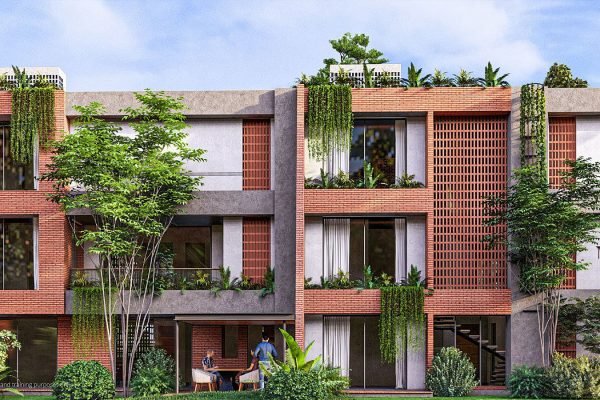
Embassy Eden, by Embassy Group, offers independent 5 BHK villas on about 30 acres at Bettahalasuru in North Bengaluru. White Lotus Amanvana, by White Lotus Allied Homes LLP, offers 4 BHK row villas on about 14 acres along IVC Road in Devanahalli. Here we compare developer profiles, approval records, value drivers and key risks in neutral terms, drawing on each official overview, without ranking either project above the other.
Embassy Group and White Lotus Group: Two Developer Profiles Compared
Embassy Group was founded in 1993 and has delivered or manages over 100 million sq ft, including about 21 million sq ft of completed homes. Its listed arm, Embassy Developments Limited, trades on the NSE and BSE with an IVR A- (Stable) rating, and Eden follows the group’s sold-out Embassy Boulevard villa community.
White Lotus Group is a Bengaluru-based boutique luxury developer founded in 2014 by Pavan Kumar Adapa, an IIT Madras alumnus, with a leadership team of IIT and IIM alumni. Its past projects include Aravindaksa, Tamara, Amaranta, Kalpavriksha and Ohana, and its signature positioning is a ‘Personal Sanctuary’ philosophy.
In Embassy Eden vs White Lotus Amanvana, buyers are choosing between a listed developer of scale and a design-led boutique firm with a shorter track record.
Approval Records, Land Title and Construction Schedules in Each Filing
Embassy Eden has completed its key approvals, including environmental clearance in January 2025, BDA building plan sanction in May 2025, KSPCB consent and an airport height NOC, followed by Karnataka RERA registration in December 2025. Construction began on 31 January 2026, and possession is proposed for December 2031.
White Lotus Amanvana’s plan was approved by the Bangalore Airport Area Planning Authority on 15 July 2025, and its overview lists a commencement certificate along with KSPCB, SEIAA and AAI clearances. The land is held under a joint development agreement with SLV Infra Project, with a 30% landowner share and a non-litigation affidavit filed with RERA.
Its RERA schedule runs from earthwork in October 2025 through to landscaping by December 2030. Buyers should verify each Embassy Eden vs White Lotus Amanvana filing on the Karnataka RERA portal.
Value Drivers Behind a Large Villa Estate and a Boutique Enclave
Embassy Eden’s value case rests on scale and scarcity. Independent villas on 6,500 and 7,800 sq ft plots at about three homes per acre rarely come to market, and the corridor is expected to benefit from Terminal 2, the Blue Line metro, the Satellite Town Ring Road and the KIADB Aerospace Park.
White Lotus Amanvana’s value case rests on low density for its corridor and on land ownership. Its overview notes that most IVC Road villa communities run at nine to fifteen homes per acre against Amanvana’s seven, and highlights an undivided land share of about 5,000 sq ft per villa.
It also cites external projections of about 12% annual growth for Devanahalli. In Embassy Eden vs White Lotus Amanvana, both cases rely on continued corridor growth and infrastructure delivery.
Risk Factors, Rental Benchmarks and Holding Horizons for Investors
Both overviews apply the A-class rental benchmark of 3.5% to 4% semi-furnished and 4% to 4.5% furnished. At Amanvana’s ₹6.5 Cr entry price, that implies about ₹1.90 lakh to ₹2.44 lakh a month, although its overview also cites corridor listings of ₹75,000 to ₹1.80 lakh a month for comparable villas.
Gross figures also differ from net returns. Amanvana’s overview notes that maintenance, vacancy and property tax typically trim 60 to 90 basis points from gross yields, while Eden’s ticket size will set its own rental range once pricing is released, so investors should model returns on actual quotes rather than benchmarks.
Each project also carries considerations that its own overview acknowledges. Before committing, investors weighing Embassy Eden vs White Lotus Amanvana should weigh these points carefully:
- Embassy Eden: possession in December 2031 means a long capital commitment.
- Embassy Eden: a narrow buyer pool at its ticket size can slow resale.
- White Lotus Amanvana: RERA completion is December 2030, with early 2029 described as best case.
- White Lotus Amanvana: as a boutique developer, its resale premium will rely on community quality and delivery record.